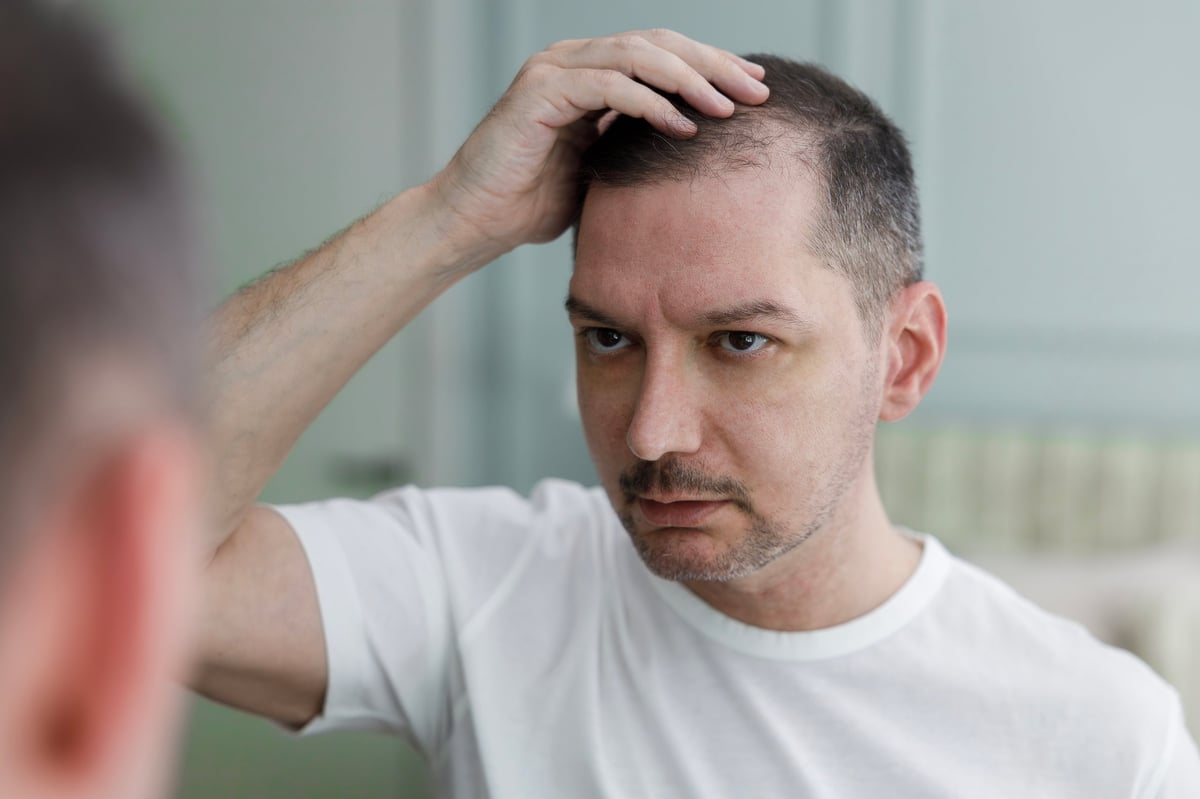
the conversation men were never taught to have
Movember asks men to talk about their health. So let’s talk about the thing most men quietly carry alone — watching their hairline leave and never saying a word about how it feels. This is what the research actually shows, what SMP really does, and why your eyebrows may matter more to your face than your hairline does.
Jump to the service you came for
In this article
First, the name. It is a simple mash-up: moustache + November = Movember. Men grow a moustache for the thirty days of November — you start clean-shaven on the 1st — and the moustache itself becomes the conversation starter. It is a walking billboard. Someone asks “what’s with the moustache?” and that is the moment you get to say, out loud, that men die younger, that men do not talk about their health, and that this is why.
The moustache is not the point. The moustache is the excuse to start the conversation.
Movember started in 2003 with thirty men in a Melbourne pub who decided to grow moustaches to draw attention to prostate cancer. Two decades later it has funded more than 1,250 men’s health projects across the world and grown into a month dedicated to four things: prostate cancer, testicular cancer, mental health, and suicide prevention.
Notice what that list includes. It is not only about disease. It is about how men feel, how men cope, and how rarely men say any of it out loud.
That is the part of Movember that almost never gets discussed at a barber’s chair or a studio consultation — and it is exactly where hair loss lives. Losing your hair is not a disease. Nobody hands you a diagnosis. But ask any man who has watched his hairline retreat over five years, and he will tell you it was not about vanity. It was about looking in a mirror and not recognising the man looking back.
This article is going to walk through three things honestly: what the research says about hair loss and men’s mental health, what scalp micropigmentation actually is and who it genuinely suits, and a topic that men almost never think about but should — their eyebrows. Because brows age, they thin, and they can do more for a man’s face than almost any other single change.
“Losing your hair is not a disease. It is a slow, silent loss of identity — and men are taught not to make a fuss about it.”
Male pattern hair loss affects roughly half of men by age fifty and up to seventy percent by age seventy. It is so common it is almost universal. And yet study after study shows a consistent pattern: men with visible hair loss report lower self-esteem, higher rates of social anxiety, and reduced satisfaction with their appearance compared to men with a full head of hair.
There is a term researchers use — “hair loss-related distress” — describing genuine psychological suffering tied to thinning hair. It is well documented in dermatology literature. It affects men in their careers, in dating, in how comfortable they feel at the front of a room. We wrote about that side of it separately, in our piece on confidence and self-esteem, and in why investing in yourself isn’t vanity.
The uncomfortable part is not that hair loss causes distress. It is that men are taught the only acceptable responses are to joke about it, ignore it, or shave it all off and pretend it was always the plan.
50%
of men show visible hair loss by age 50
70%
by age 70 — it is the rule, not the exception
1 in 3
men report noticeable distress about it
Hair loss is the most common cosmetic concern in men — and one of the least discussed. That gap is what Movember is trying to close.
Most men do not wake up one morning and decide to do something about their hair. They move through a predictable sequence — and understanding it explains why so many men wait years longer than they needed to.
It is just the lighting. It is just the shower drain. It is just a bad haircut. Men are remarkably skilled at finding a reason that is not the reason.
The hair grows longer at the sides. The hat becomes permanent. Photos are taken from a certain angle. Life quietly rearranges itself around a hairline.
Minoxidil. Finasteride. Derma rollers. Laser caps. Red light. Biotin. Rosemary oil. Hair systems. Transplants. The search history becomes a graveyard of half-started solutions. Most of that list is covered in our look at the future of hair loss treatment, and if a hair system is on the table, SMP vs hair systems is the comparison worth reading.
The clippers come out. The head gets shaved. Sometimes this is genuine liberation — and for a lot of men it truly is. Other times it is surrender dressed up as a decision.
The shift from “a balding man” to “a man with a shaved head” is not a hair change. It is an identity change. It happens in a chair, in about three hours.
The point is not that everyone should shave their head. The point is that stage five is available to almost any man with the right hair loss pattern — and most men spend five to ten years in stages one through four before they ever hear it framed as something they can choose.
Scalp micropigmentation is a specialized form of cosmetic tattooing where pigment is deposited into the second layer of skin to replicate the appearance of tiny hair follicles. Done well, it does not look like a tattoo. It looks like a shaved head with a strong, well-defined hairline. If you want the full background first, our complete beginner’s guide and the 2026 SMP guide cover it properly.
It is a visual illusion of density. It does not grow hair. It does not stop hair loss. It does not restore follicles. What it does is change how your scalp reads from three feet away — which, honestly, is how everyone sees you.
Here is the honest version: SMP is the best choice for a man whose hair loss is advanced enough that a shaved look is realistic, and the wrong choice for a man with dense hair hoping to fill in a small thin patch invisibly. The technique is only as good as the pattern it is matched to.
Advanced thinning, receding hairline, or crown loss
Men who already shave or buzz their head
Hair transplant scar camouflage (FUT strip or FUE dots)
Alopecia areata, chemotherapy loss, and medical hair loss — see SMP for alopecia and restoration after chemotherapy
Men who want density under a fading hairline without surgery
Men who tried medication and stopped, or cannot take it
What SMP is not is a tattoo in the street-shop sense. The equipment, pigment, needle depth, and follicle pattern all differ from conventional tattooing, and the artist’s eye for hairline design matters more than any of it. A technically perfect application of the wrong hairline shape looks worse than no SMP at all — because it reads as drawn on rather than grown.
This is why we built the Hyperrealism Method around variation rather than uniformity — varying follicle size, rotation, and density across zones so the pattern reads as biological rather than printed.
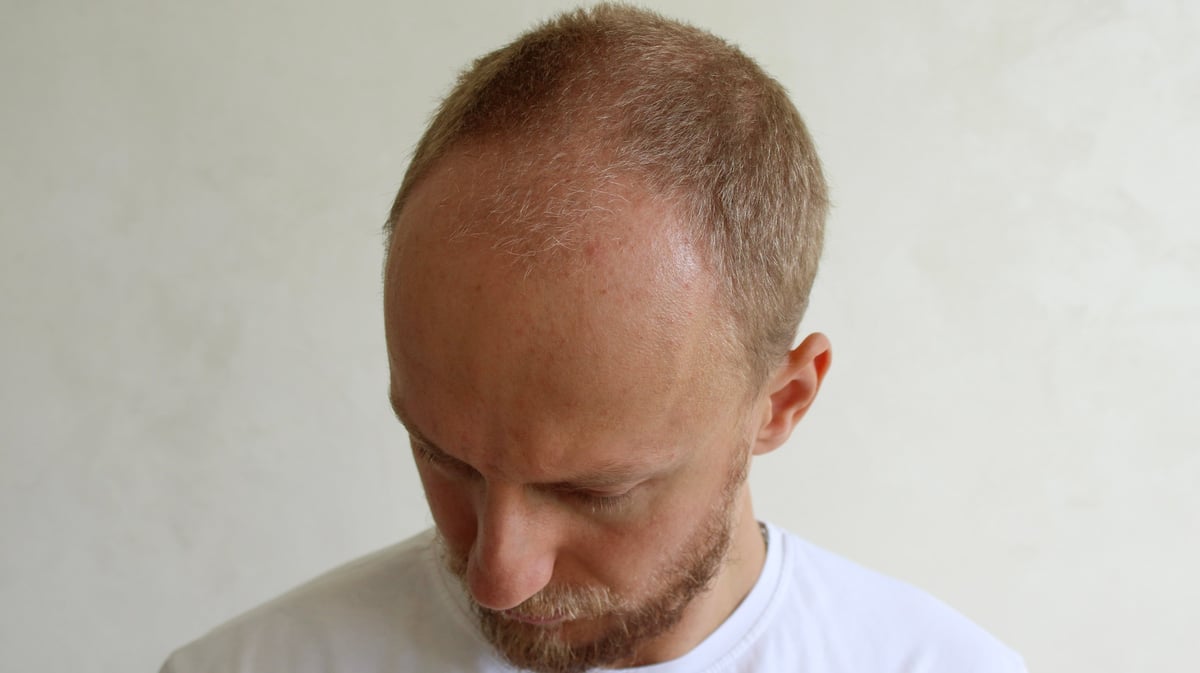
SMP does not add a single hair. It changes what the eye reads at three feet — which is how everyone actually sees you.
the highest-return change on a man’s face
Here is something most men have never considered: your eyebrows frame your entire face. They sit at the horizontal centre of everything people look at. And they change more with age than almost any other feature — more than your hairline, in many cases.
A strong brow gives structure to the eyes, defines the forehead, balances a jaw, and makes a face read as alert rather than tired. A weak brow does the reverse. It is why a man with a full head of hair and no brows can look unwell, and a bald man with strong brows can look like a movie star. It is not about hair on your head. It is about structure.
The outer third of the brow is the first to lose density in almost every man. The brow visibly shortens, which drags the eye downward and can look faintly sad.
Individual brow hairs get thicker and more wiry with age, often including grey ones that refuse to lie flat — while surrounding density drops. Coarse and sparse at the same time.
Gravity and collagen loss push the brow ridge lower and heavier. The distance between brow and eye shrinks, which can read as stern or fatigued.
Brow hairs lose melanin with age. The overall brow lightens, especially against grey or silver hair, until it virtually disappears from across a room.
The compounding effect: each of these is subtle on its own. Together, over ten years, they can take a decade off how “with it” a man looks — and it rarely registers as an eyebrow problem. It registers as “I look tired.”
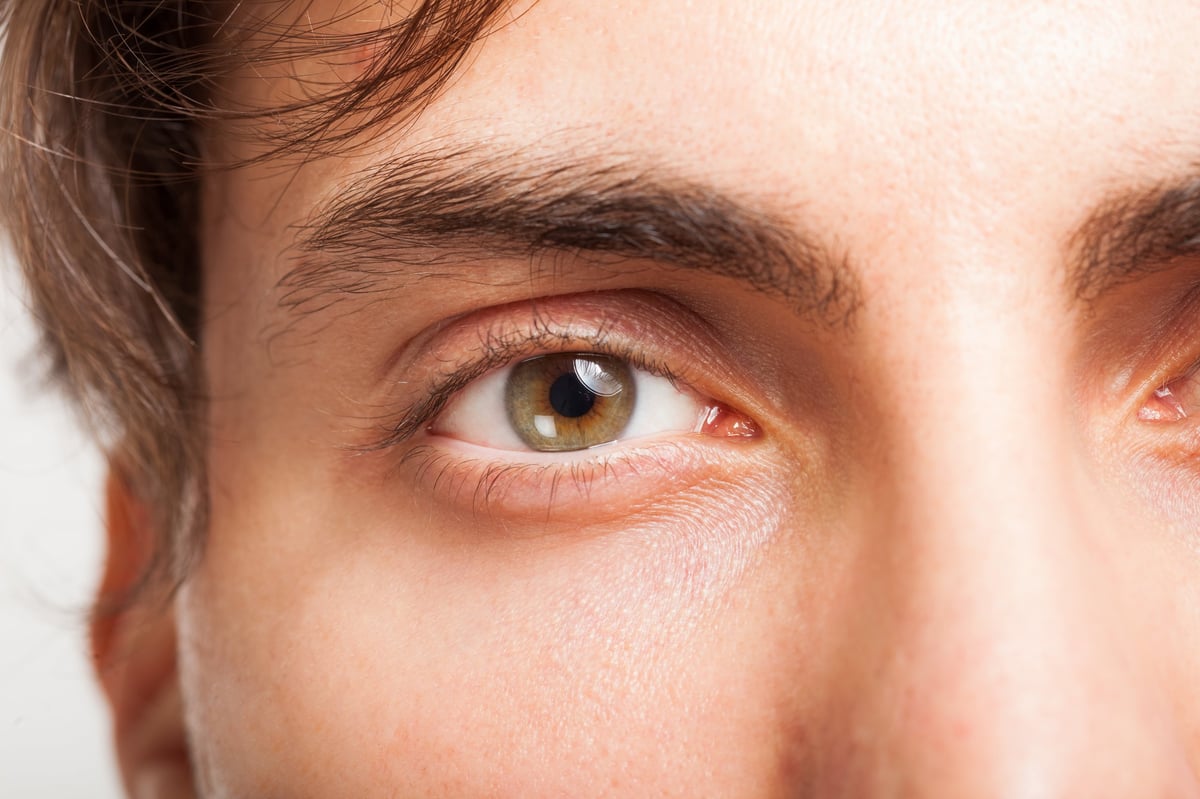
Nobody says “nice eyebrows.” They say “you look well” — or “did you get some sleep?”
Ten years ago, a man asking about his eyebrows would have been laughed out of the room. Today it is one of the fastest-growing segments in permanent makeup — and the reasons men give are far less vanity-driven than you would expect.
The men who come through our door are usually not chasing a beauty trend. They are chasing one of these:
Looking less tired. The most common phrase we hear. Men in their forties and fifties who are working hard, sleeping badly, and being told they look exhausted.
Fixing asymmetry. One brow higher, one thinner, one with a gap from an old scar. Asymmetry is normal — but it draws the eye in a way men notice in photos.
Being on camera. Zoom calls, client presentations, wedding photos, church, sales roles. A camera flattens faces and wipes out faint brows first.
Over-plucked history. A surprising number of men plucked or shaved their brows in the 90s and early 2000s and simply never grew them back.
Scar or medical loss. Brows lost to scars, burns, alopecia, chemotherapy, or thyroid conditions. This is restoration, not grooming.
Paired with SMP. When a man commits to a shaved head, strong brows become more important — there is no hair above them to balance the face any more.
Men’s brows should never look done. The goal is a groomed version of your own brow — not a shape borrowed from a trend. Four principles cover almost all of it:
The only genuinely universal grooming rule: remove the hair between the brows. Everything else is preference. A unibrow is distracting. Slightly untidy brows are not.
Tweeze only what is clearly outside the natural line. Every hair you pull from inside the brow is one you will not get back — and brows thin as you age anyway.
As brows coarsen, individual hairs grow long. Brush them up and trim just the tips that extend past the brow line. Plucking them leaves gaps.
A man’s brow should sit lower and straighter than a woman’s, with less arch. A high, arched brow on a male face reads as surprised — and as obvious work.
and the one with the biggest return
Let’s be direct about money, because this is where most men stop reading. A hair transplant can run anywhere from four thousand to twenty thousand dollars and involves surgery, healing, and a year before you see the final result. SMP across the full scalp is typically a fraction of that. A brow treatment is less again.
But it is not simply “cheaper.” It is the change with the highest visible return per dollar on a man’s face. Here is why that is true:
When people look at you, they land on your eyes and the structure around them. A brow treatment is working on the highest-traffic real estate on your face. A hairline works on the edge of it.
No six-month grow-out. No surgical recovery. You walk out looking like yourself, only more defined. There is no awkward transition period where everyone knows you did something.
This is the real reason men love it. People do not say “nice eyebrows.” They say “you look well” or “did you get some sleep?” It reads as health, not as a procedure.
Compare it to a lifetime of minoxidil, hair fibres, shampoos, or a system that needs replacing every year. One treatment, one refresh when needed, done.
If you are brow-curious but not ready to commit, this is the honest way to test it. We design a hyperrealism brow mock-up over your own photo and send it back within 24–48 hours. You see exactly what your face would look like with strong, defined brows — before you spend a cent on the treatment itself. If you hate it, you have lost $29 and saved yourself a much bigger mistake.
$29 flat, no obligation, 60 seconds to complete. Upload a photo, tell us what you want, and your hand-designed brow mock-up lands in your inbox within 24–48 hours.
Answer a short set of questions about your hair loss pattern, your skin, and what you want the result to look like. We review it personally and come back with an honest assessment — whether SMP is right for you, how many sessions you would actually need, and what it costs. No pressure, no sales calls, no obligation.
Prefer to talk it through first? Book a consultation or call or text 205-235-3878.
The men who get the most dramatic result are the ones who address both — and there is a reason for that beyond marketing. When you shave your head, you remove the frame that a hairline provided. Your face suddenly has more open space above the eyes, and that space needs structure.
Strong brows restore that structure. This is also why so many bald actors, athletes, and musicians look so deliberate — they are not just bald men, they are bald men with excellent brows. The combination reads as a choice rather than a loss.
Practically, this means a man considering SMP should think about his brows at the same time — not as an afterthought six months later. Hairline shape, follicle density, and brow strength all have to agree with each other, or the face looks assembled from separate parts.
Hairline restoration, full coverage, density, crown work, and scar concealment — everything on the men’s side of the studio.
ExploreThe deep dive — how the technique differs across hair loss patterns, skin tones, and stages.
ExploreFull scalp coverage that creates a crisp, freshly shaved appearance for advanced hair loss.
ExploreMasculine brow micropigmentation — lower, straighter, and built to look like it grew there.
ExploreHair-by-hair technique designed to disappear into existing brow hair instead of sitting on top of it.
ExplorePayment plans that spread the cost so treatment stops being a “someday” decision.
ExploreMen are significantly less likely than women to see a doctor for something that is bothering them. Men account for roughly three quarters of suicides in the United States. Men are less likely to have a close friend they confide in. These are the statistics Movember exists to confront.
Hair loss is not on that list of urgent health crises, and it shouldn’t be treated as one. But it is a quiet, everyday thing that erodes confidence in a population that has been trained not to talk about confidence at all. And confidence is not cosmetic. It changes how men interview, date, lead, and show up.
So the point of this article is not “get SMP.” The point is: it is allowed to matter to you. You are allowed to look in the mirror and want something different. You are allowed to ask about your eyebrows. You are allowed to spend money on how you feel about yourself without calling it vanity.
Free · No card required · 60 seconds
Get your free SMP assessment & quote
Your answers are reviewed personally by your artist. You’ll get an honest answer on whether SMP suits your pattern, plus a real quote.
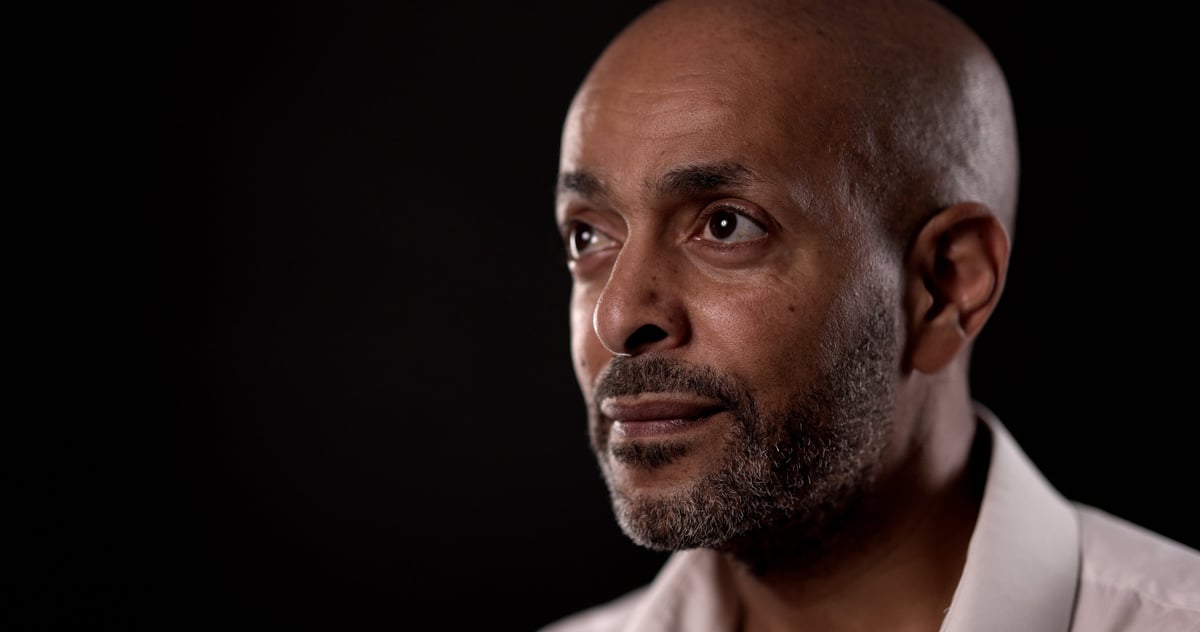
A bald man with strong brows reads as
a choice.
A balding man with weak brows reads as
a loss.
Same head. Different framing. The difference is not hair — it is structure. And structure is something you can actually decide.
The articles men ask about most, in the order they usually ask them.
Why Do Men Choose SMP Treatment?
The motivations behind the decision — and what men say afterwards.
Men’s Eyebrows: Not Just for Women
From sparse and asymmetric to defined — why brow work changes a man’s face.
Can Men Get Microblading?
Yes — but the technique has to differ. Here is how.
The Complete SMP Guide for 2026
Everything — cost, pain, longevity, aftercare, and how to choose an artist.
How Long Does SMP Last?
Honest longevity expectations, fading, and when to plan a refresh.
SMP vs Hair Transplant
A straight comparison of cost, recovery, results, and who each one suits.
Free · No card required · 60 seconds
Find out honestly whether SMP suits your hair loss pattern, how many sessions you would need, and what it costs. Reviewed personally by your artist.
Get My Free SMP AssessmentA note on this article. It reflects our editorial view and general industry knowledge, not medical advice. Hair loss can have medical causes — thyroid conditions, medication, nutritional deficiency, alopecia areata — and a doctor is the right person to rule those out. Any treatment decision should follow a proper consultation.
Back to All Articles