More Than 80 Frequently Asked Questions Answered for Men and Women — by Gemini Inked, Birmingham, Alabama
Hair loss, visible scars and thinning eyebrows may seem like three completely different concerns. However, the artistic principle behind improving all three is surprisingly similar: reduce unwanted contrast, recreate believable detail and design a result that belongs naturally on that individual person.
Before answering the questions, it helps to understand several terms that are frequently confused.
Precisely placed pigment impressions that imitate closely cut hair follicles or reduce visible scalp contrast.
Specialized pigment-matching techniques that make healed scars blend with surrounding skin — reduces color difference, does not erase the scar.
Manual hand tool creating small channels that hold pigment to resemble eyebrow hairs.
Cosmetic tattoo machine with fine needle creating individual hair-like strokes.
Soft pixelated shading that imitates brow makeup. Ombré adds a lighter-to-darker gradient.
Hair strokes combined with shading for dimension and fullness.
The visual objective: multidirectional, naturally spaced strokes & shading designed to resemble real eyebrow growth — not a solid tattoo.
A separate skin-remodeling treatment; NOT another name for microblading, nano brows, or permanent eyebrows.
Medical & Results Disclaimer: Cosmetic tattooing is not medical diagnosis or treatment. The information in this guide is based on the hands-on experience of Gemini Inked artists and is provided for educational purposes. Anyone experiencing unexplained hair loss, an active scalp or skin condition, abnormal scarring, infection, or a changing scar should consult an appropriate healthcare professional. Individual results vary based on skin type, healing response, aftercare compliance, and other factors. No result is guaranteed.
Everything you need to know about SMP — from what it actually is to how it heals, fades, and transforms lives.
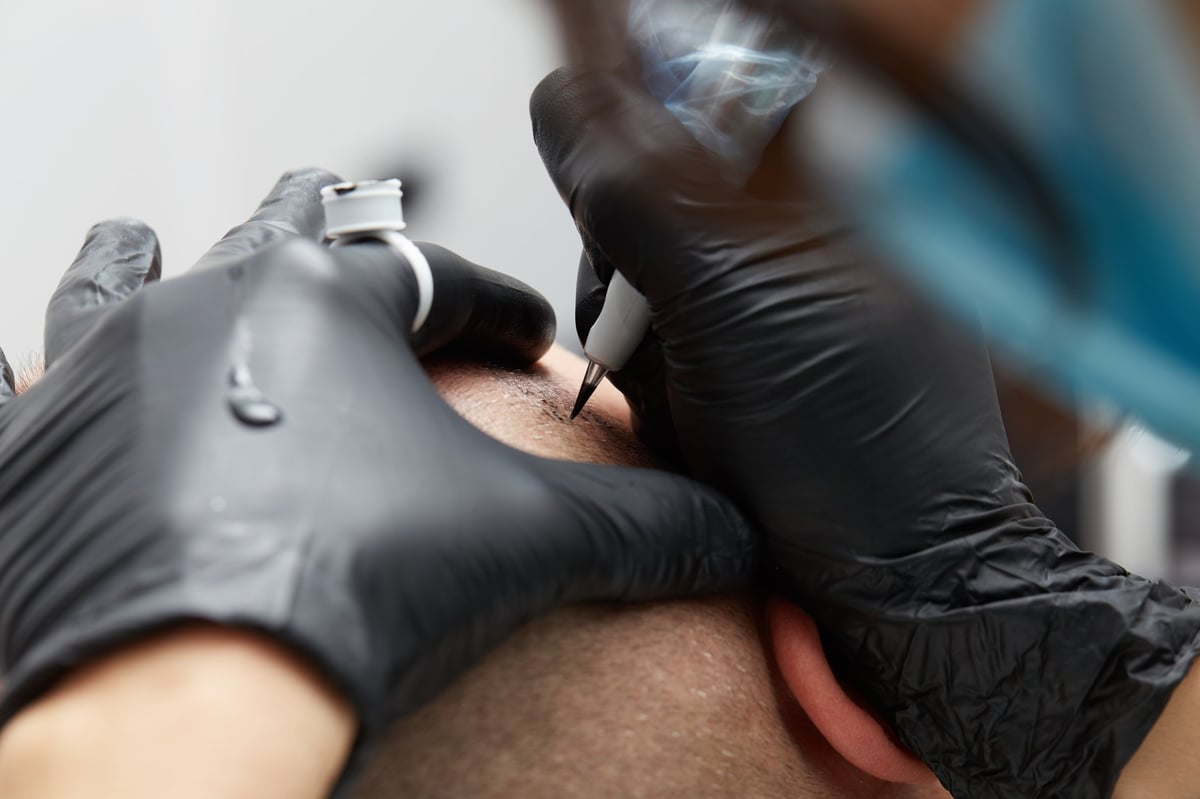
Scalp micropigmentation is a nonsurgical cosmetic procedure that places thousands of small pigment impressions into the scalp. These impressions imitate the appearance of hair follicles or create a shadow beneath thinning hair.
For a person who keeps the hair very short, SMP can reconstruct the appearance of a defined hairline and closely shaved head. For someone with longer thinning hair, it can reduce the contrast between the hair and visible scalp, making the hair appear visually denser. SMP is a cosmetic illusion — it changes the appearance of hair loss but does not produce new hair.
SMP is technically a form of cosmetic tattooing, but properly performed SMP should not look like a traditional tattoo. Traditional tattooing commonly uses larger needles, stronger saturation, deeper pigment placement and artistic lines or blocks of color. SMP requires extremely small impressions, controlled depth, appropriate pigment selection, natural spacing and a pattern that imitates real follicles. Calling SMP "just a tattoo" overlooks the specialized design and technical skills required to create a believable scalp result.
No. Scalp micropigmentation does not reactivate follicles or cause hair to grow. It creates the visual appearance of follicles, additional density or scalp shadow. People searching for the medical cause of sudden, unusual or continuing hair loss should speak with a qualified healthcare professional before relying only on a cosmetic solution. SMP may complement treatments intended to preserve or restore hair, but it should never be advertised as a hair-growth treatment.
No. Modern SMP may be used for men and women experiencing many different patterns of hair loss. Men frequently use SMP to rebuild a receding hairline, soften temple recession, improve the crown or create a complete shaved-hair appearance. Women frequently use SMP to reduce visible scalp along the part, crown, temples or areas of diffuse thinning. It may also help visually camouflage certain forms of alopecia and scalp scarring. The artistic design must be adapted to the person's hair pattern rather than applying one standard technique to everyone.
Women's hair-density SMP is normally placed between existing hairs to reduce the color contrast between the scalp and hair. The artist is not usually attempting to create the appearance of a completely shaved scalp. The impressions must be subtle enough to disappear beneath the natural hair while still adding a believable background shadow. Part placement, existing density, hair color, scalp visibility and future hair-loss progression must all be considered. Men's SMP may involve density work as well, but complete hairline reconstruction and a closely shaved appearance are more common male requests. Learn more about women's SMP services →
Yes, provided there is enough existing hair to support the visual effect and the scalp can be safely accessed. SMP does not thicken each strand. Instead, it makes the light scalp beneath the hair less noticeable. This can make the overall hair coverage appear fuller from normal viewing distances. A consultation is important because extremely advanced hair loss may not provide enough surrounding hair for density SMP to create the expected effect. Explore women's hyperrealism SMP →
Well-designed SMP should still appear natural at conversational distance and during normal daily interaction. Naturalism depends on several factors:
A result may photograph well immediately after treatment yet heal too dark, too large or too uniform. For that reason, healed results are more valuable than freshly completed photographs when evaluating an artist.
The most common visual problems include a hairline that is too dark, too straight, too low, too sharply outlined or too uniform. Natural hairlines contain irregularities. They do not normally begin with a solid wall of identical follicles. A believable hairline usually requires softer front-edge placement, gradual density and a shape that works with the client's age, facial structure and remaining hair. The objective should not be to design the youngest possible hairline — it should be to create the most believable hairline. See our hairline restoration approach →
A feathered hairline uses irregular placement and a gradual transition instead of a hard, continuous border. A broken or diffused edge allows small areas of skin to remain visible between the first impressions. Density then increases gradually behind the edge. This prevents the front from resembling a painted line or helmet.
Tell us about your hair loss pattern, goals, and concerns — we'll give you honest, personalized guidance on whether SMP is right for you.
SMP can create the appearance of greater density by reducing the contrast between light scalp and darker hair. It works especially well when thinning hair still provides coverage but the scalp has become highly visible under bright light, in photographs or along the part. The hair itself does not become thicker, and SMP cannot physically increase the number of strands.
SMP can be customized for a wide range of skin tones and ethnic backgrounds. The artist must consider the person's undertone, melanin level, hair color, degree of scalp exposure and how the pigment is expected to heal. Darker skin does not automatically require extremely dark pigment, and lighter skin does not automatically require pale impressions. The correct objective is a healed follicle color that blends with the person's natural hair and scalp — not simply matching a pigment bottle to a skin-tone chart.
Possibly, but these cases require careful planning. SMP pigment does not perfectly imitate the reflective properties of blond, red, gray or white hair. An experienced artist may use softer saturation and a shade that creates scalp shadow without appearing obviously dark. The expected haircut length and the contrast between the scalp and natural hair are important. A personalized assessment is more reliable than assuming every light-haired client will receive the same result.
SMP may visually camouflage some forms of alopecia, but the type and stability of the hair loss matter. Alopecia areata, traction alopecia, diffuse thinning and other conditions may produce very different patterns. Active inflammation, irritated scalp conditions or rapidly changing hair loss may require medical evaluation before cosmetic tattooing. SMP changes the visible contrast — it does not treat the underlying medical condition causing alopecia. Read our alopecia SMP guide →
SMP is commonly used to reduce the visibility of healed FUT strip scars and FUE extraction scars. For scar work, impressions must be blended both inside the scar and into the surrounding scalp. Treating only the scar can create a new visible block of pigment. Scar tissue may accept and retain pigment differently from normal scalp tissue, so conservative layering and additional sessions may be necessary. Explore hair transplant scar camouflage →
An FUT hair transplant removes a strip of donor tissue, generally leaving a linear scar across the back or sides of the scalp. FUE removes follicles individually, often leaving numerous small circular or dot-like scars throughout the donor area. Both types may become visible when the hair is cut short. FUT scars often require careful blending across a defined linear area, while FUE camouflage may require treating a wider donor region.
Properly performed SMP is placed superficially and is not intended to reach or destroy the deeper structures responsible for hair growth. Poor technique, excessive trauma, infection or repeated overworking can create complications, which is why depth control, sterile practices and practitioner training matter. SMP should be treated as a specialized procedure — not something performed aggressively simply because the area already has hair loss.
In many cases, yes. SMP does not automatically prevent a future hair transplant. However, the transplant physician should evaluate the scalp, existing pigment, donor availability and intended hairline before surgery. Planning is especially important because a future transplant may change the position, density or shape that the SMP was originally designed to support. Compare SMP vs hair transplants →
Yes. A transplant creates actual growing hair, while SMP may reduce the contrast that remains between transplanted hair and visible scalp. Some clients use SMP after a fully healed transplant to improve the visual density of the final result or camouflage donor scarring. The timing should be coordinated with the hair-transplant physician, and the scalp should be fully healed before pigment work begins. Read: Combining SMP with transplants →
Possibly, but clients should disclose every topical product, medication, injection treatment and hair-restoration procedure during consultation. Certain products may irritate the scalp, affect healing or need to be paused around treatment. The practitioner providing the medication or medical procedure should determine whether it is safe to interrupt or continue it. A cosmetic artist should not tell a client to discontinue a prescribed medication without guidance from the prescribing professional.
Many complete SMP treatments require approximately two to four sessions. The number varies according to the treatment area, skin response, existing hair, desired density, scarring and healed pigment retention. SMP is generally built in layers. The first session creates a foundation. Later sessions refine the color, density, shape and transitions after the previous work has healed. A promise that every person will be completed perfectly in one session should be approached cautiously.
Spacing sessions allows the skin to heal and gives the artist an opportunity to evaluate the true retained color. Fresh pigment normally appears darker and more pronounced than healed pigment. Continuing to add heavy saturation before seeing the healed result may produce an unnatural appearance. Gradual layering gives the artist more control and gives the client an opportunity to request subtle adjustments.
Comfort levels vary by person and treatment area. Many clients describe the sensation as scratching, vibration or repeated pinpricks rather than the deeper discomfort associated with a traditional tattoo. Scar tissue and certain areas of the scalp may feel more sensitive. Clients should tell the artist about medications, allergies, previous reactions and medical conditions before treatment. Read our full SMP pain guide →
Most people can return to ordinary non-strenuous activities quickly, although temporary redness or sensitivity is common. Clients are usually instructed to avoid rubbing, scratching, shaving directly over the area, heavy sweating, swimming, steam rooms and prolonged sun exposure during the initial healing period. Exact aftercare instructions vary, so the client should follow the protocol provided by the practitioner who performed the treatment. View complete aftercare instructions →
A clean, loose hat may be permitted, but it should not rub tightly against freshly treated skin or trap excessive heat and sweat. The hat should be clean because recently treated skin is more vulnerable to contamination. The artist's instructions should take priority over generalized internet advice.
Not always. A client seeking the appearance of a complete closely shaved head will generally need to keep the natural hair very short so the real hair and simulated follicles remain visually consistent. Clients receiving density SMP between existing longer hair normally do not need to shave the entire head. The treatment plan depends on the intended result.
SMP is long-lasting but should not be described as permanently unchanged. Published estimates vary, but several years of visibility is common. Gradual fading is influenced by pigment, depth, skin characteristics, immune response, scalp care, sun exposure and lifestyle. The International Society of Hair Restoration Surgery notes that well-placed SMP may last for years and that ultraviolet exposure can accelerate fading. Read: How long does SMP last? →
Poor pigment selection, excessive depth, oversized impressions and heavy saturation may create undesirable healed colors. A properly selected pigment should soften naturally rather than heal like a solid blue-black body tattoo. However, every implanted pigment can change and fade over time. Clients should examine an artist's healed work several months or years after treatment — not only immediate photographs.
Yes. Ultraviolet exposure can accelerate pigment fading. Once the scalp has healed, consistent sun protection may help preserve the appearance. This can include sunscreen suitable for the scalp, hats and avoiding unnecessary prolonged exposure. Sun protection also matters because the surrounding natural skin may tan while the implanted pigment does not tan in exactly the same way.
Yes. A touch-up may refresh faded impressions, strengthen density or make controlled design adjustments. However, repeated touch-ups should not simply make the scalp darker every year. The artist should assess whether more pigment is genuinely needed and whether enough negative space remains between impressions. A natural result must be designed to age well — not only look dramatic immediately after treatment. Read: When do you need an SMP touch-up? →
Laser removal or correction may be possible, but removal should not be treated as an easy backup plan. Results depend on pigment composition, color, depth, density and the client's skin. Multiple removal sessions may be required, and complete removal cannot always be guaranteed. The safest approach is to choose a conservative, experienced practitioner before the first treatment.
Everything you need to know about SMP — from what it actually is to how it heals, fades, and transforms lives.
Scalp micropigmentation is a nonsurgical cosmetic procedure that places thousands of small pigment impressions into the scalp. These impressions imitate the appearance of hair follicles or create a shadow beneath thinning hair.
For a person who keeps the hair very short, SMP can reconstruct the appearance of a defined hairline and closely shaved head. For someone with longer thinning hair, it can reduce the contrast between the hair and visible scalp, making the hair appear visually denser. SMP is a cosmetic illusion — it changes the appearance of hair loss but does not produce new hair.
SMP is technically a form of cosmetic tattooing, but properly performed SMP should not look like a traditional tattoo. Traditional tattooing commonly uses larger needles, stronger saturation, deeper pigment placement and artistic lines or blocks of color. SMP requires extremely small impressions, controlled depth, appropriate pigment selection, natural spacing and a pattern that imitates real follicles. Calling SMP "just a tattoo" overlooks the specialized design and technical skills required to create a believable scalp result.
No. Scalp micropigmentation does not reactivate follicles or cause hair to grow. It creates the visual appearance of follicles, additional density or scalp shadow. People searching for the medical cause of sudden, unusual or continuing hair loss should speak with a qualified healthcare professional before relying only on a cosmetic solution. SMP may complement treatments intended to preserve or restore hair, but it should never be advertised as a hair-growth treatment.
No. Modern SMP may be used for men and women experiencing many different patterns of hair loss. Men frequently use SMP to rebuild a receding hairline, soften temple recession, improve the crown or create a complete shaved-hair appearance. Women frequently use SMP to reduce visible scalp along the part, crown, temples or areas of diffuse thinning. It may also help visually camouflage certain forms of alopecia and scalp scarring. The artistic design must be adapted to the person's hair pattern rather than applying one standard technique to everyone.
Women's hair-density SMP is normally placed between existing hairs to reduce the color contrast between the scalp and hair. The artist is not usually attempting to create the appearance of a completely shaved scalp. The impressions must be subtle enough to disappear beneath the natural hair while still adding a believable background shadow. Part placement, existing density, hair color, scalp visibility and future hair-loss progression must all be considered. Men's SMP may involve density work as well, but complete hairline reconstruction and a closely shaved appearance are more common male requests. Learn more about women's SMP services →
Yes, provided there is enough existing hair to support the visual effect and the scalp can be safely accessed. SMP does not thicken each strand. Instead, it makes the light scalp beneath the hair less noticeable. This can make the overall hair coverage appear fuller from normal viewing distances. A consultation is important because extremely advanced hair loss may not provide enough surrounding hair for density SMP to create the expected effect. Explore women's hyperrealism SMP →
Well-designed SMP should still appear natural at conversational distance and during normal daily interaction. Naturalism depends on several factors:
A result may photograph well immediately after treatment yet heal too dark, too large or too uniform. For that reason, healed results are more valuable than freshly completed photographs when evaluating an artist.
The most common visual problems include a hairline that is too dark, too straight, too low, too sharply outlined or too uniform. Natural hairlines contain irregularities. They do not normally begin with a solid wall of identical follicles. A believable hairline usually requires softer front-edge placement, gradual density and a shape that works with the client's age, facial structure and remaining hair. The objective should not be to design the youngest possible hairline — it should be to create the most believable hairline. See our hairline restoration approach →
A feathered hairline uses irregular placement and a gradual transition instead of a hard, continuous border. A broken or diffused edge allows small areas of skin to remain visible between the first impressions. Density then increases gradually behind the edge. This prevents the front from resembling a painted line or helmet.
Tell us about your hair loss pattern, goals, and concerns — we'll give you honest, personalized guidance on whether SMP is right for you.
SMP can create the appearance of greater density by reducing the contrast between light scalp and darker hair. It works especially well when thinning hair still provides coverage but the scalp has become highly visible under bright light, in photographs or along the part. The hair itself does not become thicker, and SMP cannot physically increase the number of strands.
SMP can be customized for a wide range of skin tones and ethnic backgrounds. The artist must consider the person's undertone, melanin level, hair color, degree of scalp exposure and how the pigment is expected to heal. Darker skin does not automatically require extremely dark pigment, and lighter skin does not automatically require pale impressions. The correct objective is a healed follicle color that blends with the person's natural hair and scalp — not simply matching a pigment bottle to a skin-tone chart.
Possibly, but these cases require careful planning. SMP pigment does not perfectly imitate the reflective properties of blond, red, gray or white hair. An experienced artist may use softer saturation and a shade that creates scalp shadow without appearing obviously dark. The expected haircut length and the contrast between the scalp and natural hair are important. A personalized assessment is more reliable than assuming every light-haired client will receive the same result.
SMP may visually camouflage some forms of alopecia, but the type and stability of the hair loss matter. Alopecia areata, traction alopecia, diffuse thinning and other conditions may produce very different patterns. Active inflammation, irritated scalp conditions or rapidly changing hair loss may require medical evaluation before cosmetic tattooing. SMP changes the visible contrast — it does not treat the underlying medical condition causing alopecia. Read our alopecia SMP guide →
SMP is commonly used to reduce the visibility of healed FUT strip scars and FUE extraction scars. For scar work, impressions must be blended both inside the scar and into the surrounding scalp. Treating only the scar can create a new visible block of pigment. Scar tissue may accept and retain pigment differently from normal scalp tissue, so conservative layering and additional sessions may be necessary. Explore hair transplant scar camouflage →
An FUT hair transplant removes a strip of donor tissue, generally leaving a linear scar across the back or sides of the scalp. FUE removes follicles individually, often leaving numerous small circular or dot-like scars throughout the donor area. Both types may become visible when the hair is cut short. FUT scars often require careful blending across a defined linear area, while FUE camouflage may require treating a wider donor region.
Properly performed SMP is placed superficially and is not intended to reach or destroy the deeper structures responsible for hair growth. Poor technique, excessive trauma, infection or repeated overworking can create complications, which is why depth control, sterile practices and practitioner training matter. SMP should be treated as a specialized procedure — not something performed aggressively simply because the area already has hair loss.
In many cases, yes. SMP does not automatically prevent a future hair transplant. However, the transplant physician should evaluate the scalp, existing pigment, donor availability and intended hairline before surgery. Planning is especially important because a future transplant may change the position, density or shape that the SMP was originally designed to support. Compare SMP vs hair transplants →
Yes. A transplant creates actual growing hair, while SMP may reduce the contrast that remains between transplanted hair and visible scalp. Some clients use SMP after a fully healed transplant to improve the visual density of the final result or camouflage donor scarring. The timing should be coordinated with the hair-transplant physician, and the scalp should be fully healed before pigment work begins. Read: Combining SMP with transplants →
Possibly, but clients should disclose every topical product, medication, injection treatment and hair-restoration procedure during consultation. Certain products may irritate the scalp, affect healing or need to be paused around treatment. The practitioner providing the medication or medical procedure should determine whether it is safe to interrupt or continue it. A cosmetic artist should not tell a client to discontinue a prescribed medication without guidance from the prescribing professional.
Many complete SMP treatments require approximately two to four sessions. The number varies according to the treatment area, skin response, existing hair, desired density, scarring and healed pigment retention. SMP is generally built in layers. The first session creates a foundation. Later sessions refine the color, density, shape and transitions after the previous work has healed. A promise that every person will be completed perfectly in one session should be approached cautiously.
Spacing sessions allows the skin to heal and gives the artist an opportunity to evaluate the true retained color. Fresh pigment normally appears darker and more pronounced than healed pigment. Continuing to add heavy saturation before seeing the healed result may produce an unnatural appearance. Gradual layering gives the artist more control and gives the client an opportunity to request subtle adjustments.
Comfort levels vary by person and treatment area. Many clients describe the sensation as scratching, vibration or repeated pinpricks rather than the deeper discomfort associated with a traditional tattoo. Scar tissue and certain areas of the scalp may feel more sensitive. Clients should tell the artist about medications, allergies, previous reactions and medical conditions before treatment. Read our full SMP pain guide →
Most people can return to ordinary non-strenuous activities quickly, although temporary redness or sensitivity is common. Clients are usually instructed to avoid rubbing, scratching, shaving directly over the area, heavy sweating, swimming, steam rooms and prolonged sun exposure during the initial healing period. Exact aftercare instructions vary, so the client should follow the protocol provided by the practitioner who performed the treatment. View complete aftercare instructions →
A clean, loose hat may be permitted, but it should not rub tightly against freshly treated skin or trap excessive heat and sweat. The hat should be clean because recently treated skin is more vulnerable to contamination. The artist's instructions should take priority over generalized internet advice.
Not always. A client seeking the appearance of a complete closely shaved head will generally need to keep the natural hair very short so the real hair and simulated follicles remain visually consistent. Clients receiving density SMP between existing longer hair normally do not need to shave the entire head. The treatment plan depends on the intended result.
SMP is long-lasting but should not be described as permanently unchanged. Published estimates vary, but several years of visibility is common. Gradual fading is influenced by pigment, depth, skin characteristics, immune response, scalp care, sun exposure and lifestyle. The International Society of Hair Restoration Surgery notes that well-placed SMP may last for years and that ultraviolet exposure can accelerate fading. Read: How long does SMP last? →
Poor pigment selection, excessive depth, oversized impressions and heavy saturation may create undesirable healed colors. A properly selected pigment should soften naturally rather than heal like a solid blue-black body tattoo. However, every implanted pigment can change and fade over time. Clients should examine an artist's healed work several months or years after treatment — not only immediate photographs.
Yes. Ultraviolet exposure can accelerate pigment fading. Once the scalp has healed, consistent sun protection may help preserve the appearance. This can include sunscreen suitable for the scalp, hats and avoiding unnecessary prolonged exposure. Sun protection also matters because the surrounding natural skin may tan while the implanted pigment does not tan in exactly the same way.
Yes. A touch-up may refresh faded impressions, strengthen density or make controlled design adjustments. However, repeated touch-ups should not simply make the scalp darker every year. The artist should assess whether more pigment is genuinely needed and whether enough negative space remains between impressions. A natural result must be designed to age well — not only look dramatic immediately after treatment. Read: When do you need an SMP touch-up? →
Laser removal or correction may be possible, but removal should not be treated as an easy backup plan. Results depend on pigment composition, color, depth, density and the client's skin. Multiple removal sessions may be required, and complete removal cannot always be guaranteed. The safest approach is to choose a conservative, experienced practitioner before the first treatment.
From surgical scars to burn trauma — everything you need to know about medical-grade scar camouflage micropigmentation.
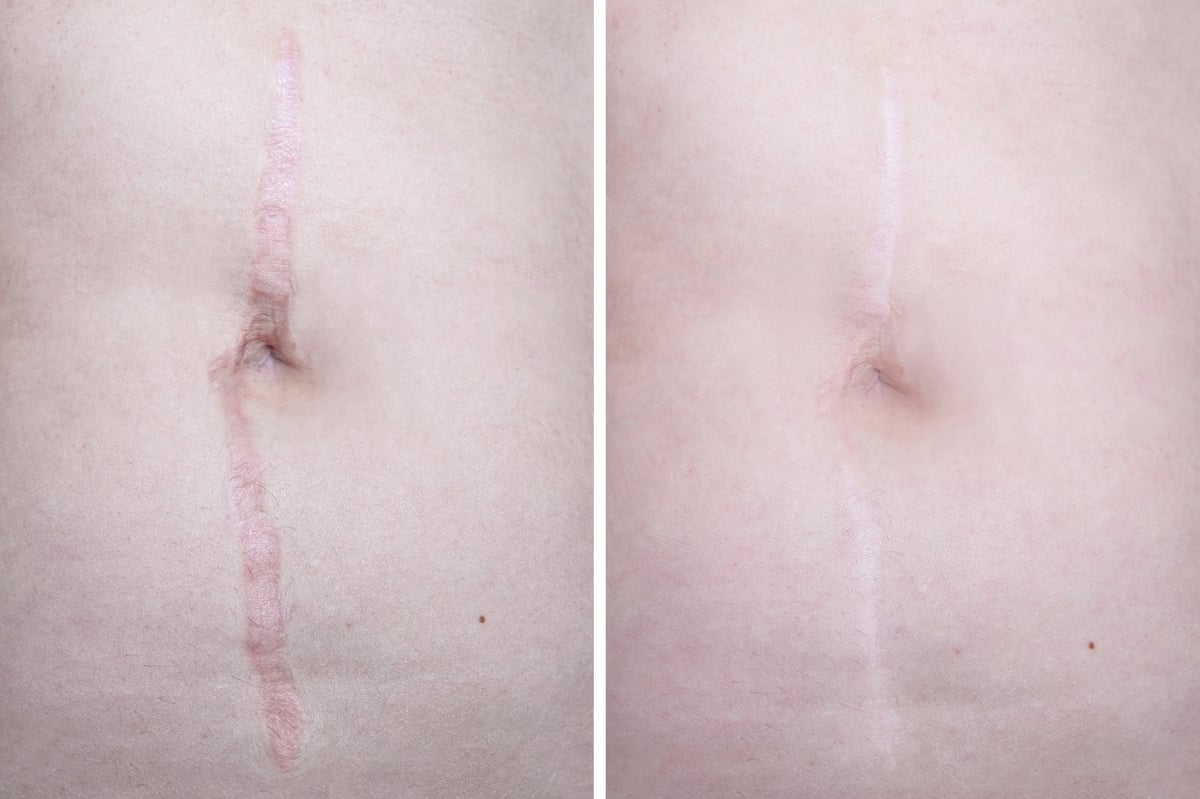
Scar camouflage is a specialized form of cosmetic or medical tattooing that places customized pigment into healed scar tissue. Its purpose is to reduce the color contrast between the scar and surrounding skin. Depending on the scar, the artist may use multiple pigment tones and gradual blending instead of one flat "skin color." Medical tattooing is used in reconstructive settings for purposes that include scar camouflage and areola restoration. Explore our scar camouflage services →
No. Scar camouflage does not remove scar tissue. A scar may be flatter, raised, indented, smooth, shiny or textured. Pigment can improve the color difference, but it cannot make all texture disappear. A realistic goal is to make the scar less visually noticeable — not promise that it will become invisible in every light and from every angle.
No. Scar camouflage can benefit men and women. Men may seek treatment for surgical scars, injury scars, burns, hair-transplant scars, facial scars or scars on the torso and limbs. Women may seek treatment for C-section scars, facelift scars, tummy-tuck scars, breast-surgery scars, injury scars, burns or other healed areas. Suitability is determined by the scar — not the client's gender. Women's scar camouflage → | Men's scar solutions →
Potential cases may include fully healed:
Not every scar is appropriate. Its age, color, texture, location, thickness, stability and the client's history of abnormal scarring all matter.
The scar should be mature, stable and fully healed. Many practitioners require approximately 12 months or longer, and some scars continue changing for up to two years. A scar that remains red, purple, painful, itchy, raised or actively changing may not be ready.
A new scar is still remodeling. Its color, blood supply, thickness and texture may continue changing. Tattooing an immature scar can interfere with healing, create unpredictable pigment retention and make the final color match inaccurate. Patience normally produces a safer and more predictable long-term result.
We'll assess your scar's maturity, texture, and suitability — then give you honest answers about what's achievable.
Lighter, stable scars are frequently considered better candidates for direct skin-tone pigment camouflage because color can be added to reduce the contrast. A red, purple or actively inflamed scar may still be healing. A dark or hyperpigmented scar cannot simply be made lighter by placing pale pigment over it; that can create an ashy or mismatched appearance. Darker scars may require a different approach, medical evaluation, color neutralization, texture work or a combination of treatments.
Keloids require extreme caution and are often unsuitable for cosmetic tattooing. A keloid extends beyond the original wound and may continue growing. Introducing additional needle trauma could worsen abnormal scar formation in a susceptible person. Anyone with a history of keloids or unexplained raised scars should obtain medical guidance before considering tattooing or microneedling.
Color correction does not flatten a raised scar. Some slightly textured scars may eventually be considered, but an actively raised, thick, painful or changing scar requires evaluation. Hypertrophic and keloid scars should not be treated as though they were ordinary flat scars.
Pigment may reduce a color difference but will not completely correct a depression. Indented scars create shadows because of their structure. Depending on the case, a medical or skin-remodeling treatment may be considered before pigment camouflage. The client should understand whether the primary problem is color, texture, depth or a combination of all three.
It may, but the artist must understand undertones, hyperpigmentation risk and how traumatized skin may heal. Pigment matching on melanin-rich skin should not rely on adding black or brown to a generic beige formula. Skin contains complex combinations of warm, cool, red, yellow, olive and neutral characteristics. A test area may be especially important when the scar's response is uncertain.
Skin is not one flat color. It changes with temperature, circulation, sunlight, tanning, dryness and lighting. Therefore, a tattooed area may blend extremely well under many conditions but cannot change in exactly the same way as living surrounding skin. A skilled artist creates a believable blend rather than promising a mathematically perfect match under every possible condition.
The natural skin may become darker while the implanted pigment remains closer to its original healed color. This may temporarily make the scar more noticeable. Sun protection helps preserve the pigment and reduces dramatic seasonal differences. Clients who tan frequently should discuss this honestly before treatment.
Some fully healed stretch marks may be candidates, particularly when they are lighter than the surrounding skin. Stretch marks often involve both color and texture. Pigment may reduce the light contrast but cannot recreate missing elasticity or guarantee completely smooth skin. Recent red or purple stretch marks are generally not treated like mature white stretch marks.
Inkless scar revision, dry needling or certain forms of microneedling focus on stimulating the scar without implanting skin-colored pigment. The intention is generally to improve texture, flexibility or appearance through a controlled healing response. Pigment camouflage focuses on correcting color. Some scars may need texture work first and pigment later. Others may be suitable for only one approach. These treatments should not be presented as interchangeable.
Multiple sessions are common because scar tissue may accept pigment unevenly. The artist may begin conservatively, allow the area to heal and then adjust the undertone or saturation. The number of sessions depends on scar size, location, texture, color, skin response and the degree of improvement being requested. Scar work should be approached as gradual blending rather than heavy one-session coverage.
Sensitivity varies considerably. Some scars are numb, while others feel more sensitive than normal skin. The surrounding tissue, location and type of scar also affect comfort. Clients should report unusual pain, sensitivity, nerve symptoms or previous healing problems before treatment.
Temporary redness, swelling, tenderness and darkening may occur. The pigment may appear warmer or stronger immediately after treatment and then soften during healing. Some pigment may be lost as the area heals, especially in scar tissue. This is one reason the artist should avoid making the initial treatment excessively dark. Picking, scratching or removing flaking skin can disturb pigment retention and increase the risk of complications.
Scar camouflage can remain visible for years, but it may gradually fade. Sun exposure, skincare products, body location, friction, immune response and pigment characteristics affect longevity. Maintenance may eventually be needed. No ethical practitioner should guarantee that a color match will remain completely unchanged for life. Read: How scar camouflage works →
Potential complications include infection, allergic or inflammatory reactions, unwanted color, poor pigment retention, color mismatch, additional scarring and dissatisfaction with the final appearance. Clean technique, single-use needles, proper screening and honest informed consent are essential.
From microblading to nano brows to hyper-realism — the complete guide to permanent eyebrow restoration for men and women.
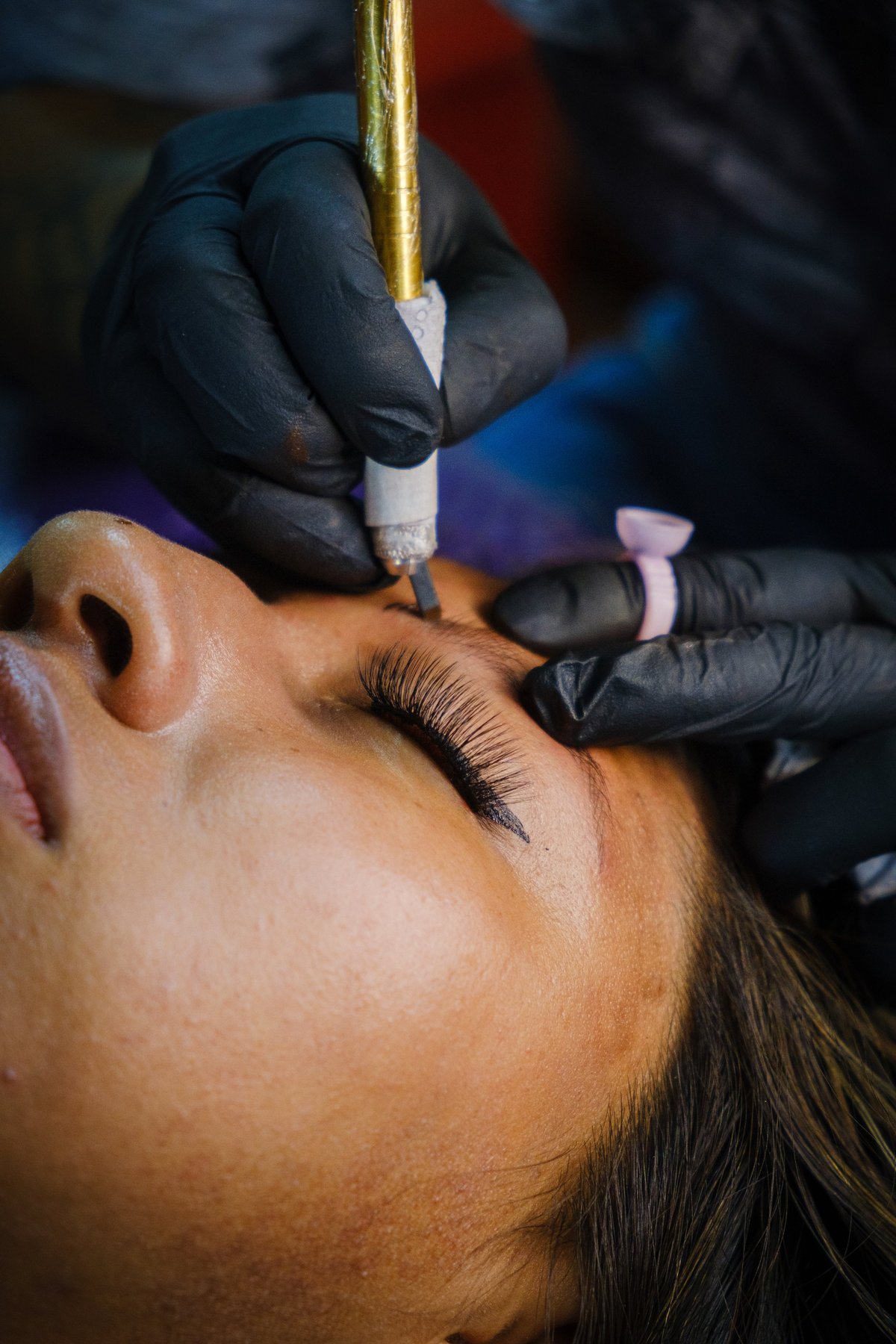
Hyper-realism brows are designed to imitate natural eyebrow growth through fine strokes, realistic direction changes, controlled spacing and sometimes soft background shading. The goal is not simply to outline an eyebrow and fill it with color. A hyper-realism design considers how real brow hairs grow from the inner bulb through the arch and into the tail. The term describes an artistic result — clients should still ask which actual technique will be used. Explore hyperrealism brows →
No. Men can also benefit from natural eyebrow restoration. Men may experience thinning from aging, genetics, alopecia, scarring, medical treatment or over-grooming. A male brow design should generally preserve a believable texture and growth pattern rather than automatically creating a sharply arched or makeup-style brow. The best design is based on the individual — not a rigid male or female template. Men's brow services →
Microblading uses a manual hand tool containing a row of fine needles to create small channels in the skin and deposit pigment. Those channels are arranged to imitate eyebrow hairs. The technique can create attractive results in suitable skin, but results depend heavily on depth, stroke spacing, skin type and the experience of the artist. Microblading is a form of superficial micropigmentation, not a temporary eyebrow pencil treatment. Learn about microblading in Birmingham →
Nano brows use a cosmetic tattoo machine and a fine needle to create individual hair-stroke patterns. The machine allows the artist to build curved, multidirectional strokes without making the same type of manual slice used in microblading. Nano brows may be selected for clients who want a highly natural hair-stroke appearance, but they still require proper skin assessment and realistic expectations. Nano brows in Birmingham →
Powder brows use small, layered pigment impressions to create a softly shaded appearance. They can range from barely visible background density to a more polished makeup effect. The front may be lighter while the body and tail contain greater definition. Powder brows are often considered for clients who want more fullness, definition or predictability than hair strokes alone can provide. Powder brows explained →
Ombré brows are a form of powder shading in which the front of the brow is generally softer and lighter, with greater density developing toward the arch and tail. The result can be subtle or bold depending on the design. "Ombré" describes the gradient — not one universal level of darkness.
Combo brows combine hair strokes with soft shading. Hair strokes may be concentrated through the front or sparse areas, while shading adds body and definition. This can be useful when hair strokes alone would leave the brow looking too empty. Combo brows may also be called hybrid brows, combination brows or hair-stroke-and-shading brows. Combo brows in Birmingham →
Not necessarily. A combo brow describes the use of more than one technique. Hyper-realism describes the desired visual result. A combo brow can look extremely natural when the strokes and shading are subtle. It can also be designed with a more polished makeup effect. Clients should discuss the desired finished style rather than relying only on the service name.
Tell us about your brow goals, skin type, and concerns — we'll recommend the best technique for your face.
No. Microneedling is generally used to create controlled micro-injuries for skin-remodeling purposes. It does not automatically create permanent eyebrow hairs or implant a brow design. Microblading, nano brows, powder brows and combo brows are pigment-based cosmetic tattoo techniques. The words sound similar, but the procedures and objectives are different.
Neither technique is automatically better for every person. The decision may depend on skin type, age, previous tattooing, amount of natural brow hair, desired appearance, artist skill and how the client's skin has healed from previous procedures. A consultation should determine the safest and most predictable technique instead of choosing solely from social-media trends. Read: Microblading vs Nano Brows →
Oily skin may blur or soften very fine hair strokes more quickly. Some clients with oily skin may achieve better healed definition with machine strokes, powder shading or a combination technique. However, skin condition varies, and no technique is guaranteed solely because it is marketed for oily skin. The artist should evaluate pore size, oil production, previous retention and the desired style.
Mature or delicate skin requires conservative technique and careful depth control. An aggressive manual technique may create unnecessary trauma. Depending on the individual, soft machine shading, carefully placed nano strokes or a combination may be considered. The safest technique is the one suited to the actual condition of the skin — not simply the client's age.
Yes, but designing a full brow without natural hair requires advanced pattern planning. The artist must create believable stroke direction, density, negative space, color transitions and symmetry while avoiding a flat tattooed appearance. Clients with eyebrow loss from alopecia or medical conditions should disclose the cause, current treatments and skin sensitivity during consultation. See hyperrealism brow results →
Yes. Men's nano brows may add visual density through sparse areas, rebuild missing tails, improve scars or restore a fuller-looking brow while preserving a masculine or naturally ungroomed appearance. Stroke direction, brow thickness and the degree of edge definition should be customized. Men's brows should not automatically be designed as women's brows with a darker pigment. Explore men's brow services →
A natural male brow often uses a flatter overall structure, varied stroke lengths, less obvious outlining and a controlled degree of irregularity. However, facial structure and natural growth matter more than stereotypes. Some men naturally have a stronger arch, while some women naturally have a flatter brow. The artist's job is to restore what looks believable on that specific face.
Brow mapping uses facial landmarks, measurements, existing hair and visual assessment to establish a proposed shape. Mapping is a guide — not a reason to force the eyebrows into perfect mathematical duplication. Human faces are naturally asymmetrical. The client should approve the general shape before pigment is implanted. A careful artist will also consider how facial expressions change the appearance of the brows.
No procedure can make a naturally asymmetrical face perfectly symmetrical in every expression. Brows sit on moving muscles. One side may lift higher when talking, smiling or concentrating. Bone structure, eyelid position and natural hair growth can also differ. A good design creates visual balance while respecting the client's anatomy.
Pigment selection considers natural brow hair, skin undertone, complexion, desired intensity and how the chosen color is expected to heal. The fresh color will normally appear stronger than the healed result. An ethical artist should avoid selecting an excessively dark color simply to create a dramatic first-day photograph. Long-term healed appearance is more important than immediate darkness.
Very dark pigment, incorrect color selection, excessive depth and poor technique can create an undesirable cool, gray or blue appearance. Modern brow work frequently uses customized brown tones and modifiers rather than automatically using solid black. Existing old pigment must also be considered because placing a new warm color over a saturated cool tattoo does not always correct it. Learn about pigment removal →
Most clients experience some discomfort, scratching or pressure. Sensitivity differs by person, skin condition, menstrual cycle, medication, stress level and procedure type. Topical products may be used according to the artist's protocol and applicable rules. Clients should never take medication solely to prepare for the procedure without appropriate medical guidance.
Fresh pigment sits within recently treated skin, and temporary redness or swelling may make the shape appear sharper. As the skin heals, the color generally softens. The final result should not be judged during the first few days. Clients should receive realistic healing information before treatment so that normal early darkness does not cause unnecessary panic.
As the skin heals, flaking and temporary changes in the surface can make pigment look uneven or unusually light. Some color may reappear as the skin settles, while other areas may genuinely retain less pigment. The follow-up session is used to assess the healed result and refine areas that need additional work. Picking flakes or scabs can remove pigment prematurely.
A follow-up session is commonly recommended because pigment retention can vary across the brow. The follow-up is not meant to redesign the entire brow without reason. It allows the artist to evaluate healed color, reinforce areas with lighter retention and make conservative adjustments. Future maintenance depends on skin, lifestyle, sun exposure, skincare and the technique used. View preparation & aftercare guide →
Permanent makeup is long-lasting but gradually changes and fades. The timeline varies according to skin type, pigment, depth, sun exposure, skincare, immune response and lifestyle. Many clients eventually schedule a color refresh, but maintenance should be based on actual fading — not an automatic requirement to make the brows darker every year.
Yes. Retinoids, exfoliating acids, strong anti-aging products, chemical peels and certain facial treatments may accelerate fading or affect pigment color when repeatedly used over or near the eyebrows. Clients should tell skincare, laser and facial providers that cosmetic pigment is present. Laser energy should not be passed directly over permanent makeup without proper professional evaluation because it may alter or remove the pigment. Daily sun protection after healing can also help reduce premature fading.
Swimming should be avoided during the initial healing period because prolonged water exposure, chlorine, bacteria and rubbing may interfere with healing. After the brows are fully healed, normal swimming can resume. Frequent chlorine exposure and sunlight may contribute to gradual fading, so ongoing protection and maintenance may be discussed with the artist.
Yes. Laser and intense-light treatments may alter, darken, lighten or remove cosmetic pigment. Before receiving laser resurfacing, IPL or another energy-based facial treatment, the client should disclose all permanent makeup. The treatment provider should protect or avoid the tattooed area when appropriate. A facial provider should never assume that a healed brow tattoo is unaffected simply because it looks natural.
Sometimes, but not every old tattoo can be successfully covered. If the existing pigment is highly saturated, too dark, badly shaped or positioned outside the desired brow, new hair strokes may not be visible. Removal or lightening may be needed first. Placing additional pigment over a saturated tattoo can make the area denser and harder to correct later. Read: Fixing bad eyebrow tattoos →
Laser or saline-based removal may be considered, depending on the pigment and situation. Removal frequently requires multiple sessions and carries its own healing risks. Complete removal cannot be guaranteed, and some pigment colors respond differently than others. This is why conservative design, proper mapping and healed-result experience should be priorities when selecting an artist. Explore pigment removal options →
Treatment may need to be postponed for people with active infection, irritated skin, open wounds, recent surgery, uncontrolled medical conditions or active problems in the treatment area. Pregnant or breastfeeding clients are frequently advised to postpone cosmetic tattooing. Medication use, immune conditions, allergies, abnormal scarring and previous reactions should always be disclosed. When medical clearance is appropriate, it should come from the client's qualified healthcare professional.
Scalp micropigmentation, scar camouflage and hyper-realism brows require different techniques, but excellent results share the same principles.
There is no universal hairline, universal skin pigment or universal eyebrow shape. An artist must consider skin tone, hair color, existing hair pattern, scar texture, facial structure, age, lifestyle, sun exposure and future maintenance.
Fresh cosmetic tattooing normally looks darker, sharper and more saturated. Ask to see healed work whenever possible. Healed photographs reveal whether impressions stayed small, strokes remained defined and colors stayed natural.
Over-saturation can make SMP look like a helmet, brows look painted and scar camouflage look like a patch. Natural skin and hair contain variation, transparency and negative space.
The artist should consider how a result may look as it fades, as hair loss progresses, as brow trends change and as the client ages. A conservative, believable design can usually be strengthened later. An excessively dark design is much harder to correct.
Before scheduling, ask these fifteen questions:
A trustworthy practitioner should be willing to explain limitations. Confidence does not require promising perfection.
At Gemini Inked, we view these services as forms of visual restoration — not mass-produced tattoos.
For men's scalp micropigmentation, the objective may be a soft, age-appropriate hairline, realistic temple recession and natural follicle variation.
For women's hair-density SMP, the objective may be reducing visible scalp without creating heavy dots beneath longer hair.
For scar camouflage, the objective is to evaluate the scar's maturity, texture, color and suitability before adding pigment.
For hyper-realism brows, the objective is to create believable growth patterns and facial balance for both men and women — not stamp the same eyebrow onto every face. The best work should not announce the procedure. It should allow the person to look restored, balanced and confident while still looking like themselves.
Every scalp, scar and eyebrow case is different. Gemini Inked provides customized consultations for:
Gemini Inked is located in Birmingham, Alabama, and serves clients from across Alabama, Tennessee, Mississippi, Louisiana, Florida and beyond. View all service areas →
Important: Cosmetic tattooing is not medical diagnosis or treatment. Anyone experiencing unexplained hair loss, an active scalp or skin condition, abnormal scarring, infection or a changing scar should consult an appropriate healthcare professional. Results vary by individual. Schedule a consultation to learn what is realistic for your specific case.
Every Google question answered — pros, cons, cost, pain, longevity.
Survey ResultsReal data on hair loss, confidence, and attraction.
Women's SMPSolutions for diffuse thinning and scalp visibility.
Artist SelectionCredentials, portfolio review, and red flags to avoid.
Scar CamouflageComprehensive guide to medical-grade scar concealment.
Scar CamouflageExpert guide on techniques for face and body scars.
BrowsTechnique, benefits, and achieving natural permanent brows.
Brows ComparisonExpert comparison for best eyebrow results.
ConfidenceThe best investment you'll ever make in yourself.
Self-WorthHow reclaiming your appearance on YOUR terms changes everything.