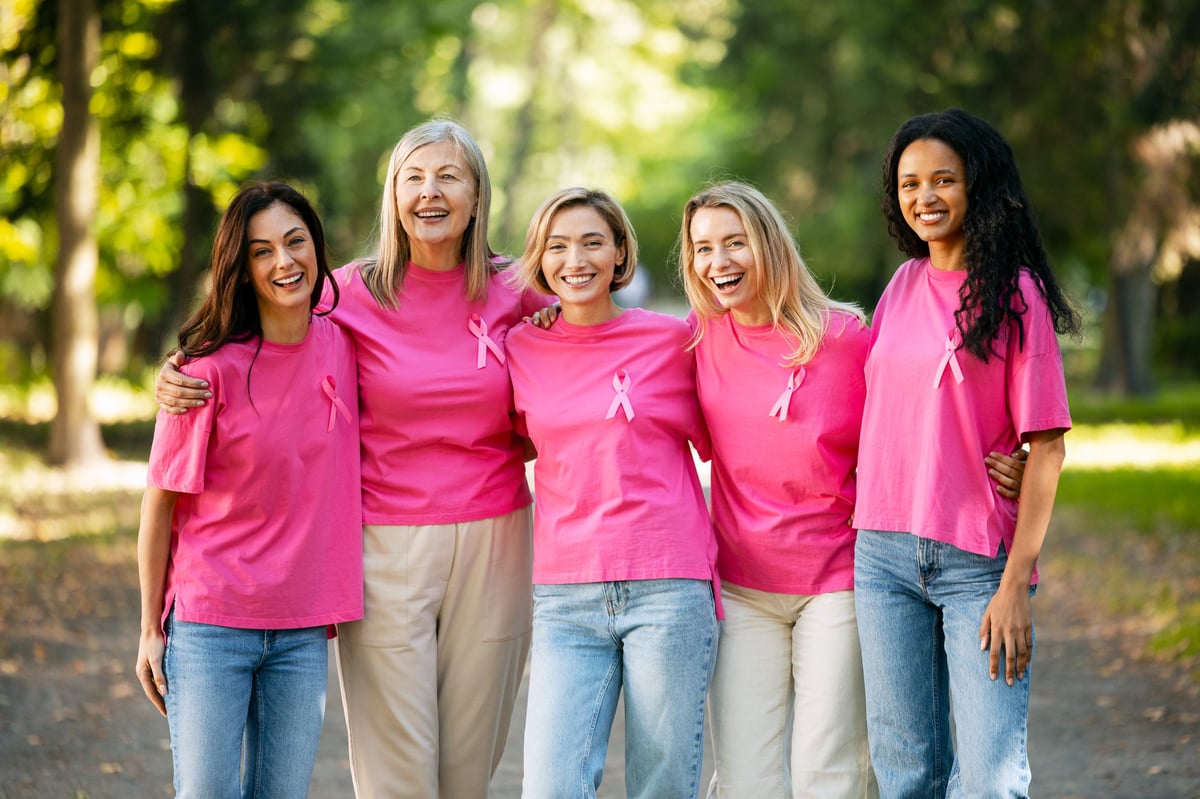
how one month changed everything
In 1985, breast cancer was spoken about in whispers. A diagnosis was often kept private, and the word itself frightened people into silence. Forty-one years later, October is the most recognised health campaign on earth. This is how it happened — what it achieved, what it got wrong, and who it left behind.
Every October, the world turns pink. Ribbons appear on football helmets, yoghurt lids, running shoes and skyscrapers. It is easy to be cynical about that — and later in this article, we will be.
But before the cynicism, there is the reason the month exists at all. In the early 1980s, breast cancer was a disease people died from quietly. Women were not routinely screened. Many did not check themselves. Surgery was discussed behind closed doors, and the word cancer was frequently written as the letter "C" in letters to family. There was no national conversation because there was no conversation at all.
The month that became Breast Cancer Awareness Month did not begin as a cultural phenomenon. It began as a practical, unsentimental public health campaign with one objective: get women to have mammograms. Understanding that origin is the key to understanding both what the movement achieved and where it went sideways.
"The greatest barrier to early detection was never the technology. It was the silence."
Breast Cancer Awareness Month was established in October 1985 as a partnership between the American Cancer Society and a pharmaceutical company called Imperial Chemical Industries (ICI). It launched not as a month, but as a week: Breast Cancer Awareness Week. ICI's pharmaceutical arm would later be spun off as a separate company — one you have almost certainly heard of today: AstraZeneca. Hold on to that detail. It matters enormously later.
The campaign's stated purpose was narrow and clinical: to encourage women over 40 to schedule regular mammograms and to promote breast self-examination. That was it. Not solidarity. Not survivorship. Not research funding. The organisers believed — correctly, as it turned out — that early detection saved lives, and that the reason women were dying was that tumours were being found too late.
The scale of the problem in 1985 is difficult to convey now. At that time, roughly one in eleven American women could expect to be diagnosed with breast cancer in her lifetime. Treatment options were brutal and limited. Mammography equipment was less precise, and access to screening was inconsistent. Most importantly, there was no cultural expectation that a woman should be screened — no annual reminder, no pink ribbon on her coffee cup, no public conversation telling her to book the appointment.
1985
The first Breast Cancer Awareness Week is held in October
1 in 11
A woman's lifetime risk in 1985, before the campaign existed
1 in 8
A woman's lifetime risk today — higher, largely because we live longer
That the lifetime risk figure rose rather than fell is not a failure of the campaign. Longer lifespans and far better detection mean more diagnoses are recorded. The number that matters is not how many women are diagnosed — it is how many die.
For its first several years, the campaign was effective but visually anonymous. What turned October into a global event was a small piece of pink fabric.
In 1991, the Susan G. Komen Foundation handed out pink ribbons to every participant in its New York City Race for the Cure. The following year, 1992, the ribbon was formally established as the symbol of breast cancer awareness by Alexandra Penney, then editor of SELF magazine, and Evelyn Lauder of Estée Lauder, who made it the centrepiece of a dedicated awareness campaign.
The ribbon did something no leaflet or public service announcement had managed. It gave the disease a language that did not require anyone to say the word "cancer" out loud. A woman could pin a ribbon to her jacket and signal both her experience and her solidarity without exposing herself to a single uncomfortable question. That quietness is precisely what made it travel so far, so fast.
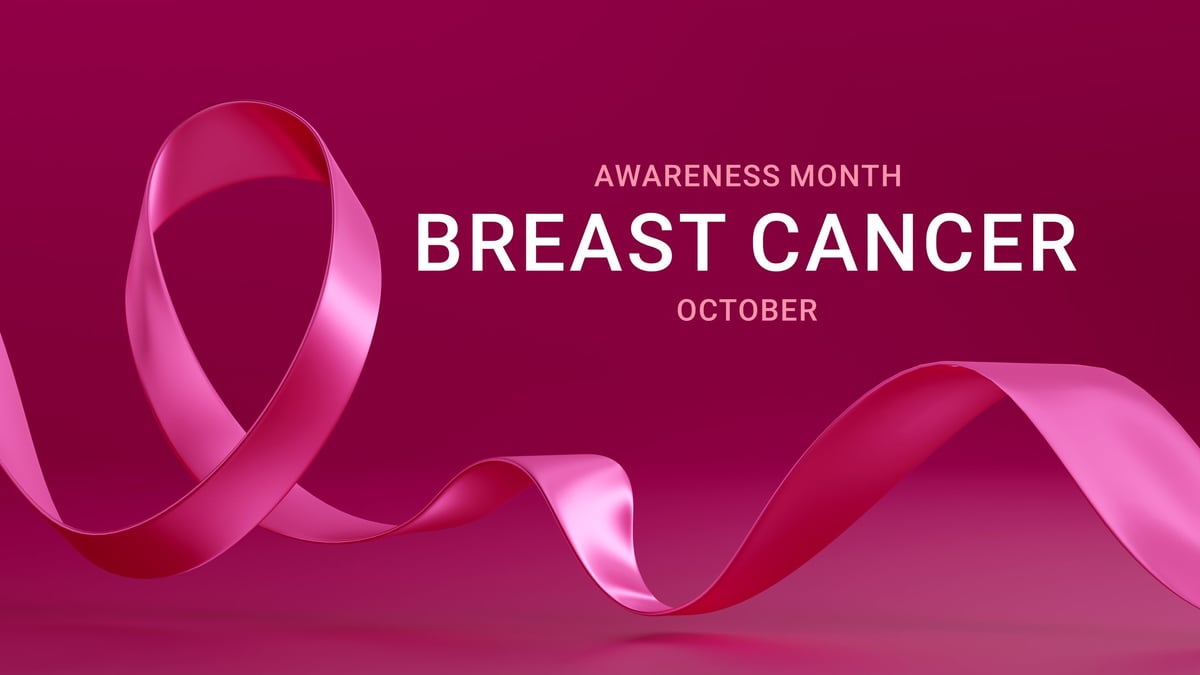
The symbol
A simple ribbon became the most recognised health symbol in the world within a decade.
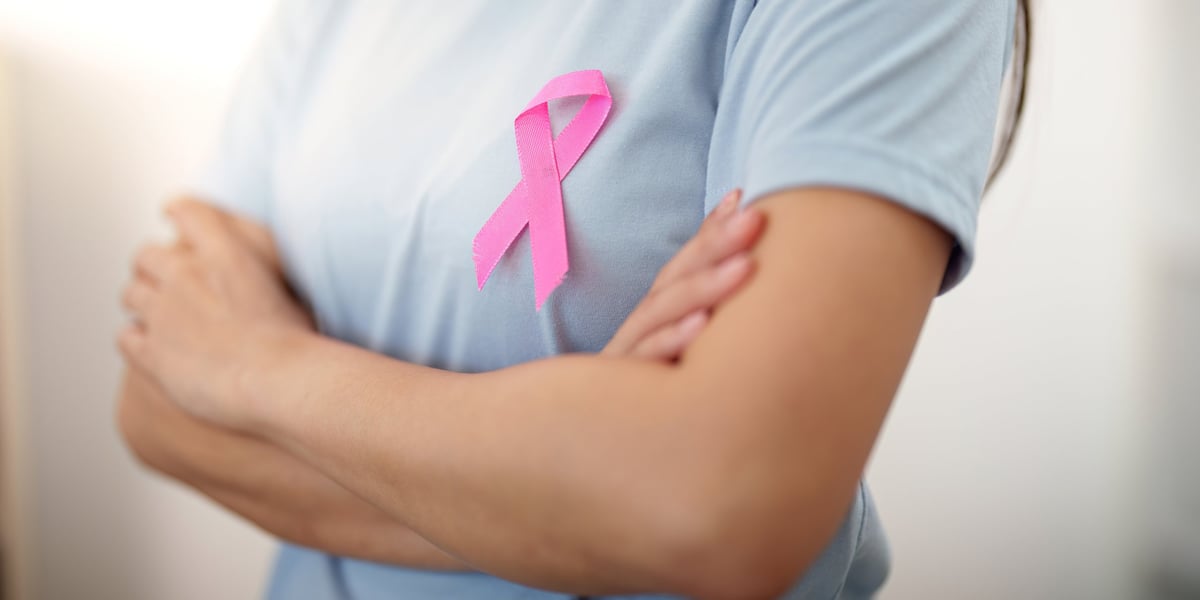
The signal
It let people declare their experience without having to explain it.
This is the part that deserves to be told plainly, without hedging. The change in breast cancer outcomes since 1985 is one of the genuine public health successes of the modern era — and there is broad agreement that awareness and screening campaigns contributed to it, alongside significant advances in treatment.
~43%
Decline in the U.S. breast cancer death rate
Between 1989 and roughly 2020, the breast cancer mortality rate in the United States fell by around 43%, according to American Cancer Society figures. That decline represents hundreds of thousands of lives not lost.
99%
Five-year relative survival for breast cancer caught in its earliest, localised stage
This single figure is the strongest argument the awareness movement has. When breast cancer is found before it spreads, it is overwhelmingly survivable. That is exactly why the original 1985 campaign focused on mammography.
4 million+
Breast cancer survivors living in the United States today
A population larger than the city of Los Angeles. Their existence — and their willingness to speak publicly — is what dissolved the stigma that surrounded the disease in 1985.
The movement also changed something less measurable but arguably just as important. It made breast cancer a subject people could discuss. In 1985, a diagnosis was often concealed even from close family. By the 1990s, survivors were walking in races wearing the names of friends they had lost. That shift — from private shame to public solidarity — is the real legacy of the pink ribbon.
And it helped fund the science. The visibility created political pressure, and political pressure created research money. Many of the targeted therapies that drive today's survival figures were built on decades of funding that a ribbon helped unlock.
This is the part of October that is rarely mentioned, and it is a genuine failure of the way the month is communicated.
Men have breast tissue. It is less developed than in women, which is why male breast cancer is far less common — but it is there, and it can become cancerous. Roughly 2,800 men in the United States are diagnosed with breast cancer each year, and around 530 die from it. Male breast cancer accounts for less than 1% of all breast cancer cases.
That rarity is exactly what makes it dangerous. Because breast cancer is culturally framed as a women's disease, men do not check for it, are not offered screening, and frequently delay seeking help when they notice a lump — often for months. The result is that male breast cancer is typically diagnosed at a later stage, and outcomes are worse.
~2,800
U.S. men diagnosed with breast cancer each year
~530
U.S. men who die from it annually
<1%
Share of all breast cancer cases that occur in men
Why some men are at higher risk
BRCA gene mutations. Men who carry a BRCA1 or BRCA2 mutation face a substantially increased lifetime risk of breast cancer — and may also pass that mutation to their children.
Family history. A close relative with breast cancer, particularly a male relative, raises risk meaningfully.
Hormonal and liver conditions. Certain conditions affecting oestrogen levels, including liver disease and some genetic syndromes, are associated with higher risk.
Previous chest radiation. Men treated with radiation to the chest for other cancers carry elevated risk later in life.
The takeaway for men is not to be alarmed — it is to be informed. A lump, nipple discharge, skin dimpling or persistent change in the chest is worth a doctor's appointment, not a wait-and-see. Awareness that excludes half the population is incomplete awareness.
This article is general information, not medical advice. If you notice a change in your breast tissue — male or female — speak with a qualified healthcare provider. Risk factors describe populations, not individuals.
An honest account of October has to include the criticisms, because the criticisms are largely legitimate. Respecting the movement means holding it to account, not defending it reflexively.
Remember the detail from Part One: the campaign was co-founded by the pharmaceutical company ICI, which later became AstraZeneca — a company that manufactures breast cancer drugs, including tamoxifen. That relationship has never sat comfortably with everyone, and it is the root of the term "pinkwashing": the practice of corporations using pink-ribbon branding to generate goodwill and sales while contributing little, or while simultaneously being accused of contributing to cancer risk through environmental practices.
The advocacy group Breast Cancer Action, based in San Francisco, coined the term and has run a long-standing campaign encouraging consumers to interrogate pink products before buying them. Their central question is a fair one: does this purchase actually fund research, or does it simply fund marketing?
None of this means awareness is worthless. It means that a pink ribbon on a product is not, by itself, a contribution to anything.
This is the most serious criticism, and it is not a matter of opinion. Black women in the United States experience a breast cancer death rate roughly 40% higher than that of White women — despite being diagnosed at a similar or lower rate overall. Black women are also more likely to be diagnosed with aggressive subtypes such as triple-negative breast cancer, and more likely to be diagnosed at a younger age.
The causes are multiple and interconnected: differences in access to timely screening and quality care, delays in follow-up after an abnormal result, differences in treatment received, and the cumulative effects of structural inequity. A month of pink ribbons does not address any of them. Awareness campaigns that celebrate survivorship without confronting this gap are telling only part of the story.
Awareness is not the same as equity
Getting more women to book a mammogram helps. But it helps most those who already have access to screening, follow-up, and treatment. If the month is to mean anything in its fifth decade, the focus has to move from volume of awareness to equality of outcome.
Breast cancer is not one disease, and the movement has historically spoken about it as though it were. Around a third of women diagnosed with early-stage disease will eventually develop metastatic breast cancer — cancer that has spread. Metastatic breast cancer is currently incurable, and it receives a disproportionately small share of research funding relative to its death toll.
For the roughly 30% of patients facing that path, an October of survivorship messaging built around "early detection saves lives" can feel alienating. They did everything right. The messaging was not built with them in mind.
None of these critiques invalidates the month. They refine it. A campaign that can admit its blind spots — men, disparities, metastatic disease, and the commercial capture of its own symbol — is a campaign worth defending.
Awareness ends at diagnosis. Survival does not. There is a long stretch after treatment finishes — after the surgeries, the reconstruction, the scans — where many women are told the medical part is over and left to navigate the rest alone.
That "rest" is not cosmetic trivia. Mastectomy scars, reconstruction scars, and the loss of an areola are permanent visible reminders of the hardest period of someone's life. Many women describe avoiding mirrors, swimming, intimacy, and certain clothing because of how those areas look — years after being declared cancer-free. The survival was the goal. Nobody talked much about what surviving would feel like.
Paramedical pigmentation — the discipline practiced at Gemini Inked — exists for exactly that gap. It is not reconstructive surgery and it does not pretend to be. It is artistry applied to healed, stable tissue, with the goal of making a scar less noticeable or restoring the appearance of an areola where reconstruction has removed one.
For women whose areola was removed or altered during mastectomy or reconstruction. Custom-blended pigment and a three-dimensional technique are used to recreate the appearance of a natural areola on fully healed tissue.
Learn about 3D areola restorationCustom pigment is blended to match the surrounding skin tone and layered into a healed scar, reducing contrast so the scar recedes visually. Used for mastectomy scars, surgical scars, burns and more.
Explore scar camouflageRestoration is a private, personal decision. It begins with a private conversation, a review of your healing, and honest guidance about what is and is not appropriate for your tissue. No one should feel rushed.
See how a consultation worksWho Does This Work
This kind of treatment asks something unusual of an artist: technical precision, clinical judgement about tissue, and genuine patience. Meet the people behind the work at Gemini Inked.
Awareness without action is decoration. If October is going to mean something, here are five things that actually matter — none of which require buying a pink product.
Book the screening you've been putting off. If you are due for a mammogram, October is a convenient excuse. If you have a family history, ask your doctor whether you need earlier or additional screening.
Talk to the men in your life about it. Most men do not know they can get breast cancer, and fewer know that a BRCA mutation can be inherited through the paternal line. That conversation takes two minutes.
Check where your money actually goes. If you buy a pink product, find out whether a meaningful percentage reaches research or patient support. If the answer isn't clear, it probably doesn't.
Make room for metastatic disease. When you talk about breast cancer, remember the people for whom this is not a survivorship story. Their experience is part of the truth of this disease.
Be careful with how you speak to survivors. Not everyone wants to be celebrated, and not everyone wants to be called brave. Ask. Then listen.
Breast Cancer Awareness Month is personal to our family. To mark it, Gemini Inked is selecting two women to receive two separate complimentary restoration treatments — one 3D areola restoration and one scar camouflage. There is no purchase required to enter, and no medical information is requested.
Sponsored by Gemini Inked, LLC — 5520 Highway 280, Suite 4, Birmingham, Alabama 35242. No purchase necessary. This promotion is not sponsored, endorsed, administered by, or associated with Facebook, Instagram, or Meta.
Forty-one years after that first quiet week in October 1985, the conversation has completely changed.
More women survive. More men know they are at risk. More survivors speak without shame. That is a genuine achievement, and it belongs to the people who pushed for it — the survivors, the families, the researchers, and yes, the organisers of a campaign that started with one practical goal and accidentally changed a culture.
From Gemini Inked
We are a paramedical pigmentation studio in Birmingham, Alabama. Most of our work is hair and brows. Some of it is restoration — and that part means more to us than anything else we do.
Related Reading
Supporting Cancer Survivors After Chemotherapy
SMP and permanent makeup for post-chemotherapy hair loss.
Scar Camouflage for Surgical & Mastectomy Scars
How medical-grade pigment reduces the visual impact of scarring.
3D Areola Restoration
Recreating a natural areola after mastectomy or reconstruction.
The Gift of Restoration Giveaway
Two women. Two complimentary restoration treatments. Free entry.
A note on sources and scope. Statistics in this article are drawn from widely published figures reported by major cancer organisations and are approximate. Breast cancer statistics are reported periodically and are periodically revised, so figures should always be checked against the latest published data. This article is educational content, not medical advice, and does not create a patient relationship. For anything concerning your own health, consult a qualified healthcare provider.